
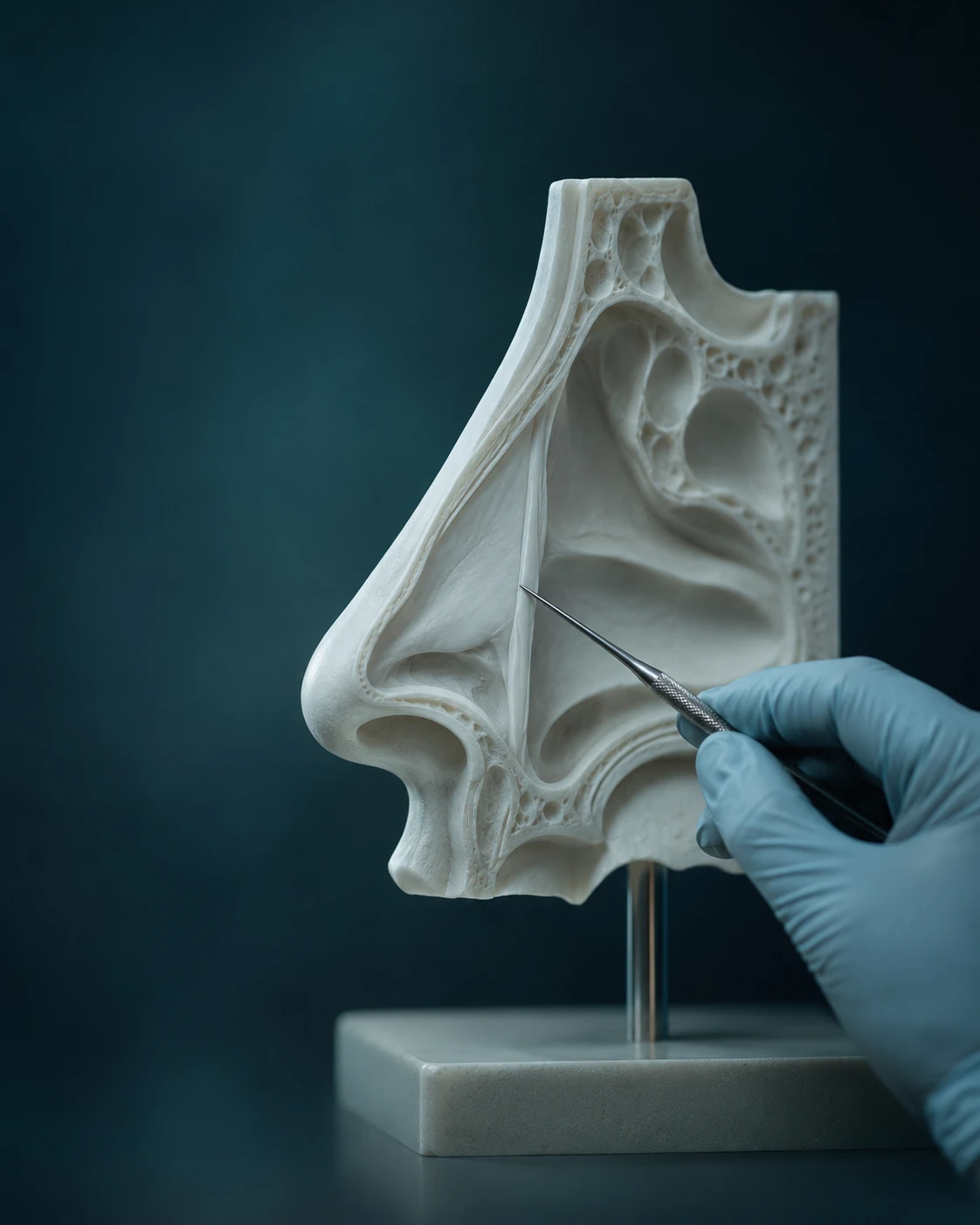
Difficulty breathing through the nose can be felt most during sleep or while exercising. When we look into it, the inner structure of the nose and the effect of the complaint on daily life are assessed together. A deviated septum is one of the structural problems that can make breathing through the nose harder.
Learning that the inside of the nose is crooked can raise questions about when surgery is considered. The starting point of the assessment is understanding the difficulty you experience and examining the nose. The curve itself matters, but so does what complaints it causes.
How does a crooked septum affect breathing?
The septum is the wall of bone and cartilage that divides the inside of the nose into a right and a left chamber. A deviated septum is a curve in this wall, either present from birth or developing later after a blow or an accident. The curve can make it harder to breathe through the nose and to exercise. Snoring and pauses in breathing during sleep, known as apnoea, are among the problems that can come with it.
At the consultation, besides the curve, we assess in which situations the difficulty is felt. Problems during sleep, snoring and strain while exercising are all part of this picture. Describing in your own words how the complaints affect your quality of life helps us decide on the right approach.
When is septoplasty considered?
Septoplasty is surgery to straighten the septum and to help reduce the breathing problems caused by the curve. Its aim is to correct the curve inside the nose. Done with the right technique, septoplasty does not change the outer shape of the nose. Expectations about appearance are therefore discussed separately.
Septoplasty can be considered for women who have turned 16 and men who have turned 17, provided nothing stands in the way of surgery. When severe breathing difficulty and sleep apnoea are present, an earlier decision to operate may come up. Age is only one of the factors in the assessment. Whether surgery is suitable is decided from the complaints and the examination findings together.
The surgical technique and enlarged turbinates
Septoplasty is usually done under general anaesthesia. For suitable patients, local anaesthesia can also be chosen at the patient's request. In most cases the incision is made inside the nose, so no visible scar is left. For some curves that cannot be corrected with the closed method, an open technique may be used. The right approach becomes clear after the examination.
Enlarged turbinates, the fleshy ridges inside the nose, known as concha hypertrophy, can accompany a deviated septum. When needed, turbinate reduction can be carried out during the same operation. For patients who also want a procedure for the appearance of the nose, cosmetic surgery can be considered in the same session. This approach is called septorhinoplasty. In the surgical plan, the purpose of each procedure, whether it targets breathing or appearance, is explained separately.
Returning to daily life after septoplasty
Septoplasty takes about 30 to 45 minutes, and the silicone splints are usually removed after 3 to 4 days. Most people return to daily life within the first week. Avoiding heavy exercise for about a month is recommended. These are general time frames. Recommendations for your own recovery are set together with your surgical plan, and the return to daily life and the start of heavy exercise are separate parts of that plan.
To have the link between your breathing difficulty and the septum assessed, you can use the contact form, call us or write to us on WhatsApp to book a consultation.